
Why does Apple manufacture in China? It’s a question often asked by customers, competitors, small business owners, and policymakers. The answer is not as simple as “cost savings” — and in 2026, it has become even more complicated.
Apple is actively working to shift U.S.-bound iPhone production to India. That effort is real and accelerating. And yet China still manufactures the vast majority of Apple’s global output, and the components feeding Apple’s Indian assembly lines still largely come from Chinese suppliers. The lesson for U.S. companies is not that China is invincible. It’s that the manufacturing ecosystem built there over 40 years is not easily or quickly replaced.
This article explores why Apple chose China, what advantages the country continues to provide, how the current shift is unfolding, and what smaller U.S. companies can apply to their own sourcing decisions.
Why Does Apple Manufacture in China?
Apple manufactures in China because China has the supplier base, workforce, infrastructure, and production flexibility needed to make complex products at very high volume.
An iPhone is not made by one factory. It depends on a large network of suppliers producing components, subassemblies, packaging, tooling, and finished goods. China has spent decades building the kind of manufacturing ecosystem that can support that level of coordination.
For Apple, China offers several key advantages:
- Skilled workers with electronics manufacturing experience
- Large contract manufacturers capable of high-volume assembly
- Supplier clusters located near final assembly plants
- Strong logistics infrastructure for global exports
- Fast production ramp-up capabilities
- Engineering and technical talent close to production
- Experience meeting global quality, compliance, and documentation standards
That combination is difficult to replace quickly.
China Offers More Than Low Labor Costs
A common assumption is that Apple manufactures in China because labor is cheaper. Labor cost does matter, but it is only one part of the equation.
For a company like Apple, speed, precision, scale, and supplier coordination are just as important.
When Apple launches a new product, it needs to produce millions of units within a tight timeline. That requires more than assembly workers. It requires tooling suppliers, component manufacturers, packaging vendors, quality teams, engineers, logistics providers, and production managers working in sync.
China’s manufacturing ecosystem makes that possible.
In industrial hubs such as Shenzhen, suppliers are often located close to one another. If a design change, quality issue, or production delay occurs, nearby suppliers and engineers can respond quickly. That proximity helps shorten lead times, reduce downtime, and keep production moving.
For Apple, that speed is a competitive advantage.
For smaller U.S. companies, the same principle applies. The lowest-cost factory is not always the best option. A supplier’s location, surrounding vendor network, technical capability, responsiveness, and ability to solve problems may matter more than the initial quoted price.
How Apple’s Supply Chain Works
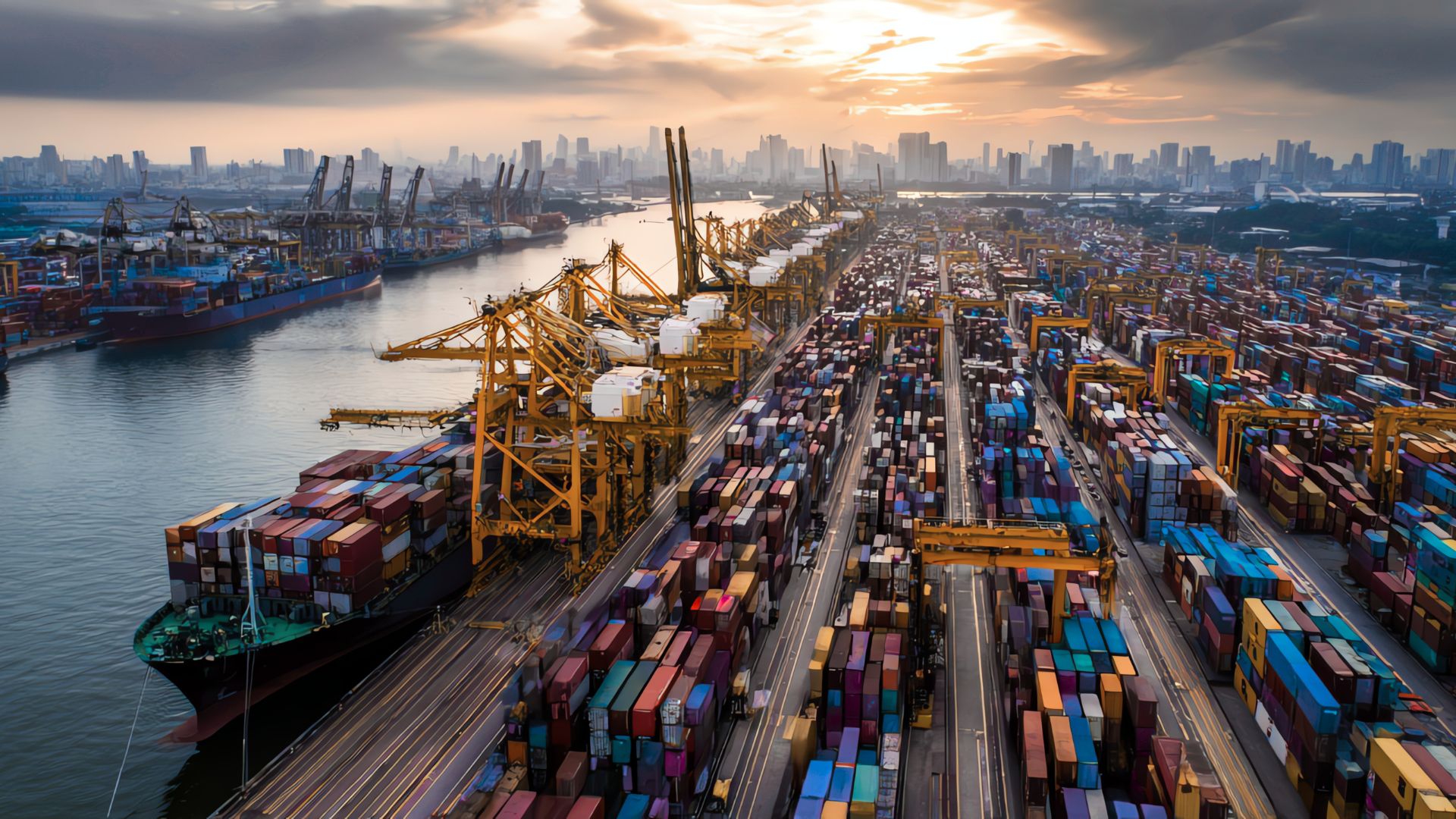
Apple’s supply chain in China is not just a few factories producing phones. It is a massive and coordinated network of assembly plants, component suppliers, logistics providers, and packaging facilities working together.
Speed is one of its greatest strengths. When Apple needs to increase production of a new component, Chinese suppliers can adapt in weeks rather than months. Skilled engineers and technicians are available in large numbers, allowing design changes to roll out quickly.
Coordination between nearby factories also matters. When suppliers and assemblers are clustered together, problems get solved faster. For a company shipping millions of devices each quarter, that speed keeps Apple ahead.
Over time, China’s role in Apple’s supply chain has deepened. Where Apple once relied primarily on China for final assembly, the country now also supplies a significant share of components. Sensors, circuit boards, batteries, and metal enclosures for iPhones are sourced from Chinese suppliers even as final assembly begins shifting to India.
Why Apple Is Moving Some Production Out of China
Apple is expanding production outside China because relying too heavily on one country creates risk.
Several factors have pushed Apple to diversify:
- Tariff uncertainty
- U.S.-China trade tensions
- Rising geopolitical risk
- Pandemic-era supply chain disruption
- Pressure to reduce concentration in one market
- Growing manufacturing capability in India and other regions
Apple is accelerating its shift away from China for U.S.-bound production. Reports indicate that Apple is targeting to assemble most U.S.-sold iPhones in India by the end of 2026. India currently accounts for roughly 25% of global iPhone assembly, up sharply from just a few years ago.
The shift, however, is more complicated than the headlines suggest. Indian assembly facilities remain heavily dependent on Chinese-made subcomponents. Production costs in India run approximately 5% to 8% higher than equivalent operations in China. And efforts to transfer engineering expertise have faced real friction: Foxconn pulled Chinese engineers from Indian facilities in 2025, creating production gaps that took months to address.
Tariff pressure has accelerated Apple’s diversification timeline. Apple reported paying more than $3.3 billion in tariff costs from April to December 2025. The math is clear: every quarter of delay in shifting production costs real money.
Challenges Apple Faces in China — and What Smaller Companies Should Know
Apple’s supply chain in China is robust but not without risk. The challenges Apple navigates are the same ones smaller companies encounter earlier and with less cushion.
Geopolitical tensions and tariffs
Trade disputes and tariff volatility create real uncertainty. Apple absorbed over $3 billion in tariff costs, but smaller businesses rarely have that margin. Planning production strategy around potential tariff scenarios is now a baseline requirement, not a contingency.
Overdependence on one region
Heavy reliance on a single country or region leaves a supply chain exposed to disruptions. Apple’s experience over the past two years illustrates what concentration risk looks like in practice. Smaller companies have an advantage here: they can diversify more nimbly than a company the size of Apple.
Rising costs and shifting labor dynamics
Chinese labor remains cost-competitive relative to most alternatives, but wages have risen steadily, narrowing the cost advantage. The complete cost picture — including logistics, quality oversight, and landed cost — matters more than the labor line alone.
Supply chain disruption
Factory shutdowns, port closures, and raw material shortages have shown that even the most sophisticated supply chains are vulnerable. On-the-ground oversight and long-standing factory relationships are what create visibility and faster response when problems arise goals.
What U.S. Companies Can Learn From Apple’s Manufacturing Strategy
Most U.S. companies cannot copy Apple’s supply chain. Apple has unusual scale, leverage, capital, and supplier influence.
But the principles behind Apple’s strategy are useful for any company sourcing overseas.
1. Look Beyond Unit Cost
The lowest unit price does not always produce the lowest total cost.
A quote may look attractive until freight, tariffs, tooling, defects, delays, packaging, rework, and communication issues are included. The better question is not “Which factory is cheapest?” but “Which supplier can produce the part reliably at the best total landed cost?”
For U.S. companies, total cost should include:
- Unit price
- Tooling
- Packaging
- Freight
- Duties and tariffs
- Quality inspections
- Engineering changes
- Inventory carrying costs
- Delay risk
- Communication and oversight
A reliable supplier with a slightly higher unit cost may be less expensive in the long run if it reduces defects, delays, and surprises.
2. Prioritize Supplier Ecosystems
Apple benefits from supplier clusters. Smaller companies can use the same idea.
A factory located near material suppliers, tooling vendors, finishers, packaging providers, and logistics hubs may be able to solve problems faster than a factory operating in isolation.
Supplier ecosystems matter because manufacturing problems rarely stay limited to one step. A material issue can affect tooling. A tooling delay can affect sampling. A packaging change can affect freight. A quality issue can affect delivery.
When suppliers are connected and experienced, the entire process moves more efficiently.
3. Build Flexibility Into the Supply Chain
Apple’s diversification strategy shows the importance of flexibility.
Companies that rely on one country, one factory, or one supplier may be more vulnerable to disruption. But diversification should be intentional. Adding suppliers without a clear plan can create more complexity, not more resilience.
A flexible sourcing strategy may include:
- One primary supplier and one qualified backup supplier
- Production in China with alternate capacity in another country
- China for high-volume production and another country for lower-volume runs
- Overseas component sourcing with final assembly closer to the customer
- Safety stock for critical parts
- Clear contingency plans for tariffs or shipping disruption
The right structure depends on the product and business model.
4. Treat Compliance as a Core Requirement
Apple’s supply chain depends on documentation, quality systems, import compliance, and product standards. Smaller companies need the same discipline, even if their production volumes are lower.
Overseas manufacturing requires clear documentation around:
- Product specifications
- Materials
- Labeling
- Packaging
- Testing
- Certifications
- Country of origin
- Import classifications
- Duties and tariffs
- Quality standards
- Inspection requirements
Compliance should not be addressed at the end of the process. It should be built into sourcing, quoting, sampling, production, and shipping from the beginning.
5. Invest in Supplier Relationships
Apple’s supplier relationships are built over time. That matters.
A transactional supplier relationship may work when everything goes according to plan. But when demand changes, materials become scarce, tariffs shift, or quality issues appear, strong relationships become more valuable.
U.S. companies should look for manufacturing partners who communicate clearly, document assumptions, flag issues early, and take ownership when conditions change.
Good overseas sourcing depends on more than finding a factory. It depends on managing the relationship.
How to Evaluate Whether China Is Right for Your Product
Before choosing China, India, Vietnam, Mexico, or another manufacturing market, companies should evaluate the product and supply chain requirements.
Use these questions as a starting point:
- What materials and components does the product require?
- Are those materials readily available in the country being considered?
- Does the region have factories experienced with this product type?
- What production volume is required?
- How much tooling or engineering support is needed?
- What quality standards must be met?
- What certifications, labels, or documentation are required?
- What is the full landed cost after freight, duties, tariffs, and inspections?
- How quickly can the supplier scale production?
- What happens if the primary supplier has a delay?
- Is there a backup factory or alternate country option?
- Who will manage communication, quality, logistics, and issue resolution?
The answers to these questions are more important than the country name alone.
What Apple’s Strategy Means for Smaller U.S. Companies
Apple’s experience in 2025 and 2026 is a useful case study for any U.S. company managing overseas production.
Even the world’s largest companies are rethinking where and how products are made. Tariffs, geopolitics, labor costs, shipping disruption, and customer expectations are changing sourcing decisions.
But Apple’s experience also shows that supply chains cannot be rebuilt overnight.
For smaller U.S. companies, this creates an opportunity. Smaller companies are often more nimble than large global brands. They may be able to diversify faster, qualify alternate suppliers sooner, or adjust production strategies with less complexity.
But they still need a clear plan to build a supply chain that supports the company’s product, customers, margins, and growth plans.
How ITI Manufacturing Helps U.S. Companies Source Overseas
ITI Manufacturing helps U.S. companies make informed overseas sourcing decisions based on product requirements, supplier capability, cost, quality, logistics, and risk.
With more than 50 years of global manufacturing experience, ITI works with customers to evaluate the right country, factory, and production strategy for their specific needs.
That may mean manufacturing in China. It may mean developing an alternate source in another country. It may mean keeping part of the supply chain in China while moving another part elsewhere.
ITI helps customers manage the process from sourcing through delivery, including:
- Supplier identification
- Factory evaluation
- Quoting
- Sampling
- Production
- Quality oversight
- Logistics
- Compliance
- Communication
- Delivery
Overseas manufacturing works best when companies have visibility, predictability, and accountability throughout the process.
Frequently Asked Questions About Apple Manufacturing in China
Why does Apple manufacture iPhones in China?
Apple manufactures many iPhones in China because China has a mature electronics manufacturing ecosystem. The country offers skilled labor, experienced contract manufacturers, supplier clusters, logistics infrastructure, and the ability to scale production quickly.
Is Apple moving manufacturing out of China?
Apple is moving some production out of China, especially for U.S.-bound iPhones. India has become an important part of Apple’s diversification strategy. However, China remains central to Apple’s supply chain because many components, suppliers, and engineering resources are still based there.
Does Apple manufacture in China only because it is cheaper?
No. Cost is one factor, but it is not the only reason. Apple relies on China because of speed, scale, supplier depth, technical capability, logistics infrastructure, and manufacturing experience.
What is a China Plus One strategy?
A China Plus One strategy means a company continues manufacturing in China while also developing production capacity in another country. The goal is to reduce overdependence on one region while preserving the benefits of China’s established manufacturing ecosystem.
Should U.S. companies still manufacture in China?
For many U.S. companies, China can still be a strong manufacturing option. The decision depends on the product, production volume, materials, quality requirements, landed cost, tariffs, lead time, and risk tolerance. Some companies may benefit from China, while others may need a diversified sourcing strategy.
What can smaller companies learn from Apple’s supply chain?
Smaller companies can learn that successful manufacturing depends on more than the lowest quote. Supplier ecosystems, production flexibility, quality oversight, compliance, logistics, and long-term relationships all affect the success of an overseas manufacturing strategy.
Ready to Make a Smarter Overseas Manufacturing Decision?
Apple’s manufacturing strategy shows why global sourcing decisions require more than a simple cost comparison.
China remains a powerful manufacturing hub, but diversification is becoming more important. The right answer depends on your product, your timeline, your volume, and your risk tolerance.
ITI Manufacturing helps U.S. companies evaluate overseas manufacturing options, manage supplier relationships, and build supply chains designed for visibility, predictability, and accountability.
Ready to work with a partner who understands the full picture of overseas manufacturing?
Contact ITI Manufacturing today.
ITI Manufacturing is an employee-owned company headquartered in Sugar Land, Texas, with more than 50 years of experience helping U.S. companies source and manage overseas manufacturing. Contact us or request a quote to talk through your sourcing needs.