What is metal component manufacturing?
Metal component manufacturing is the process of turning raw metal into finished parts that meet a specific job, fit, and performance requirement. That can include everything from simple brackets to complex machined parts, castings, forgings, and assembled components.
On the surface, that sounds simple. It usually is not.
A single part may pass through several stages before it is ready to ship: casting, forging, machining, finishing, inspection, packaging, and freight coordination. Every one of those stages introduces risk. A missed tolerance, an unclear drawing, the wrong material callout, or a weak inspection plan can create problems that do not show up until the parts are already in transit or on your floor.
That is why buyers should look beyond basic capability. A supplier may be able to make the part. The bigger question is whether your manufacturing partner can manage the process well enough to deliver it correctly, consistently, and on time.
Common metal component manufacturing processes
There is no single best way to make a metal part. The right process depends on the part’s size, material, tolerances, production volume, and intended use.
Casting
Casting is often a good fit for complex shapes or designs that would take significantly more time or material to machine from solid stock. Metal is melted, poured into a mold, and allowed to solidify. Sand casting, die casting, and investment casting are the most common variations. Each comes with different tradeoffs in cost, complexity, and production volume.
- Die casting uses a permanent metal mold and is usually best suited for high-volume production and parts that require tighter consistency.
- Sand casting uses expendable molds, which makes it more cost-efficient for low-to-mid volume production and for larger parts.
- Investment casting uses a ceramic mold cavity that produces a smoother finish and can hold tighter tolerances, which helps reduce the amount of machining required after casting.
Forging
Forging uses compressive force to shape metal. Because the process works the metal while it remains solid, forging produces a refined grain structure that follows the contours of the part. The result is a component with excellent strength, improved mechanical properties, and better resistance to fatigue. That is why forging is common in demanding industrial and load-bearing applications.
CNC machining
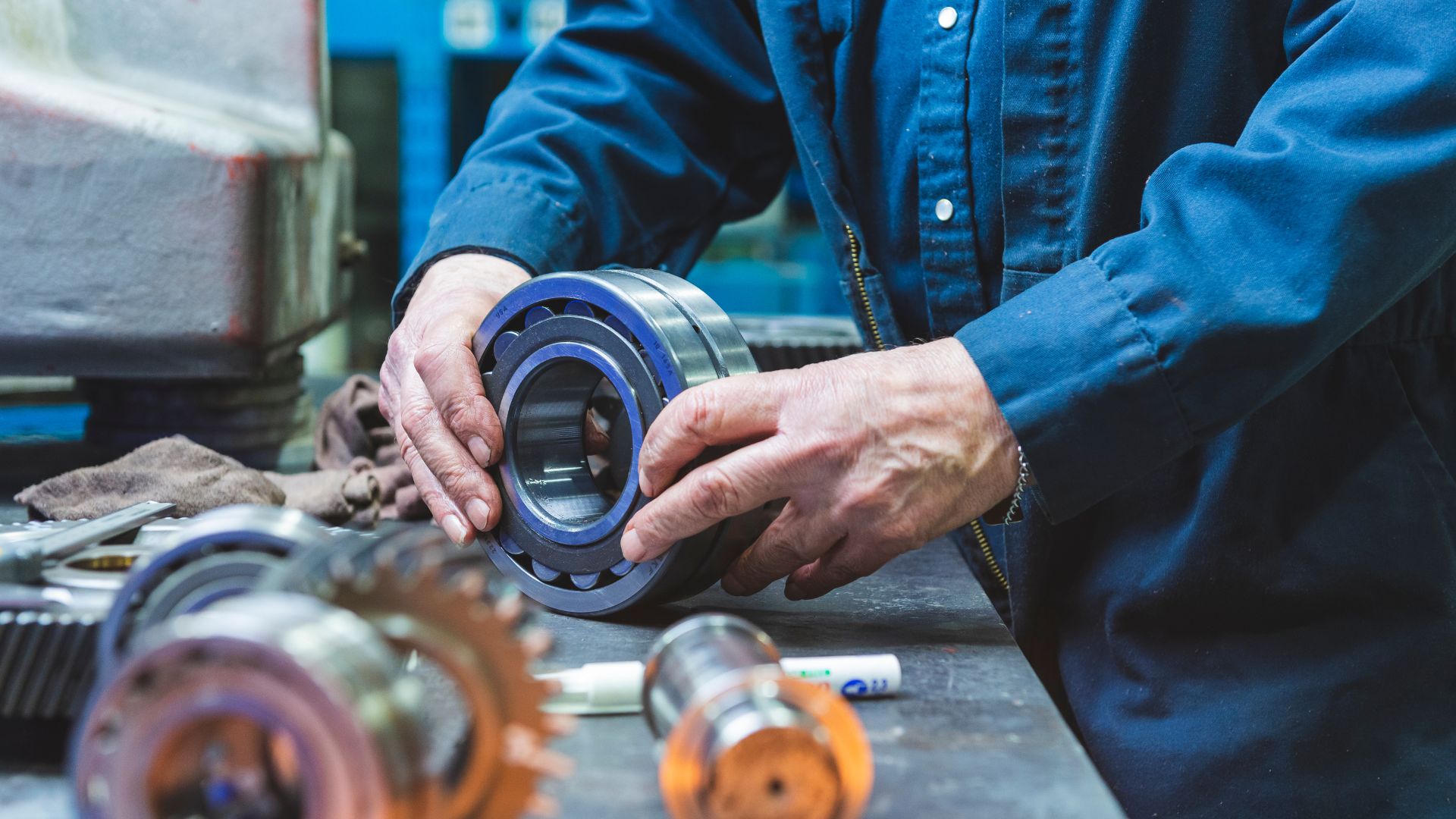
CNC machining removes material to achieve a finished shape and precise dimensions. It is commonly used for tighter-tolerance parts, more intricate geometries, or lower-volume production where dedicated tooling would not make financial sense. It is also a common secondary process after casting or forging.
Metal stamping
Metal stamping uses presses and tooling to form sheet metal parts. It is commonly used for brackets, housings, clips, and other components that need to be produced consistently at scale. Tooling can be expensive upfront, but when volumes are high enough, stamping can be extremely efficient.
Material selection matters more than most buyers realize
Material affects strength, corrosion resistance, weight, thermal performance, machinability, and cost.
- Carbon steel is popular for its strength and affordability.
- Stainless steel provides corrosion resistance.
- Aluminum is often selected when weight reduction is important for efficiency and performance, while still offering durability at a fraction of the weight of steel.
- Copper stands out for its excellent electrical conductivity, making it ideal for electronics and electrical applications.
What to actually look for in a manufacturing partner
Upfront alignment on requirements. Strong partners lock in specifications before production begins, covering materials, dimensions, tolerances, finish requirements, compliance needs, and packaging expectations. Unclear specifications are one of the most common causes of quality failures in metal component manufacturing. Getting aligned early is still one of the best ways to prevent problems later.
Supplier fit for the part. Not every factory is the right fit for every part. A machining shop that does excellent work on small, high-tolerance components may not be the right source for a high-volume stamping.
In-process inspection, not just final inspection. Final inspection is important, but it can only catch problems after they have already happened. In-process checks during production create opportunities to identify and correct issues before they affect an entire batch. This is particularly important on longer runs and in overseas production, where shipping a non-conforming order back is expensive, slow, and disruptive.
Real communication. In overseas sourcing, communication gaps are one of the most common contributors to cost overruns and delays. Buyers should expect to know where their project stands, what risks exist, and where there are open questions.
Accountability when things go wrong. Problems happen even on well-run projects. A strong manufacturing partner identifies issues quickly, escalates them clearly, and works toward resolution rather than minimizing or deflecting. How a supplier handles the first problem is often a reliable indicator of how the broader relationship will work.
Support beyond the production floor. Metal component manufacturing does not end when a part comes off the machine or press. Packaging, freight, customs, and lead time buffers all affect whether the part arrives when and how you need it. A partner who helps manage the full supply chain is far more valuable than one who treats delivery as someone else’s problem.
Why a proven process matters in overseas sourcing
Domestic sourcing has its own challenges. Overseas sourcing adds layers: longer lead times, time zone gaps, additional handoffs, limited direct visibility into production, and more complex freight and logistics.
A manufacturing partner with strong process controls and clear communication practices reduces risk in ways that are difficult to quantify in a quote but become very apparent when something goes wrong.
Buyers who have been through difficult overseas sourcing experiences often describe the same pattern: the price looked good, the capabilities seemed sufficient, but when problems arose, visibility and accountability were lacking. Resolving those issues took time, cost money, and created downstream disruption.
Total cost is not the same as piece price
When evaluating metal component manufacturers, it is easy to compare quotes and focus on price per part. That comparison has its place, because cost matters. But a lower unit price does not automatically mean lower total cost.
Delays cost money. Quality issues cost money. Internal troubleshooting costs time. Reshipping or scrapping a non-conforming order costs both. The suppliers most likely to create those problems are often the ones whose quotes looked most attractive upfront.
Total value in metal component manufacturing includes quality consistency, lead time reliability, communication, speed of issue resolution, and confidence that the project will land where it needs to. A partner who helps deliver on all of those dimensions provides real value, even if their piece price is not the lowest in the pile.
A note on how we approach this at ITI
The biggest problems in manufacturing are rarely random. More often, they stem from unclear requirements, missed handoffs, and issues not caught early enough. A proven process, supplier fit, and consistent communication are the mechanisms are what help prevent those breakdowns.
If you are evaluating options for castings, forgings, machined parts, stampings, or custom assemblies, we are happy to talk through what your project requires. Visit our metal components page to learn more about our capabilities and how we work with customers from sourcing through delivery.
Frequently Asked Questions
What is metal component manufacturing?
Metal component manufacturing is the process of producing parts and assemblies from raw metal materials, including steel, stainless steel, aluminum, brass, copper, and specialty alloys. Common processes include CNC machining, stamping, casting, forging, extrusion, fabrication, finishing, and assembly.
What are the most common metal manufacturing processes?
CNC machining, metal stamping, casting, forging, extrusion, and fabrication are among the most common. The right process depends on the part’s design, material, required tolerances, production volume, and end use.
What materials are commonly used?
Carbon steel, stainless steel, aluminum, brass, copper, zinc, and specialty alloys are all commonly used. Material selection depends on strength, corrosion resistance, conductivity, weight, finish requirements, and cost.
What is the difference between casting, forging, machining, and stamping?
Casting forms parts by pouring molten metal into a mold. Forging shapes metal under compressive force while it remains solid, which refines grain structure and improves mechanical properties. Machining removes material to achieve precise dimensions. Stamping forms sheet metal using tooling and presses. Each offers different advantages depending on the application.
Why do metal component projects run into quality problems?
Most quality problems in metal component manufacturing can be traced back to unclear specifications, poor communication, insufficient in-process checks, or supplier mismatches. These issues are usually preventable, but they require attention early in the project, not after production is already underway.