
On Friday, February 20, 2026, the Supreme Court ruled that the president cannot use IEEPA (the International Emergency Economic Powers Act) as a blank-check authority to impose broad tariffs, because tariffs function as taxes and the taxing power belongs to Congress.
This ruling may remove one big tool, but it doesn’t remove the volatility. It changes how tariffs may be imposed, how fast they can appear, and how likely they are to survive legal challenge.
Here’s what the ruling means, what it doesn’t, and what businesses should do next.
What the Supreme Court Actually Ruled
The core issue was simple: Can the President use IEEPA to impose sweeping tariffs?
In a 6-3 ruling, the Court answered: No.
Why?
- IEEPA doesn’t clearly authorize tariffs. It grants emergency powers, but it doesn’t explicitly hand over the power to impose broad import taxes.
- Tariffs are taxes. Tariffs are revenue to the U.S. government collected at the border and paid for by the importer. Ultimately, these tariffs raise costs throughout the supply chain. The Court treated that as a core reason this power must come from Congress, not from a sole decision by the executive.
- Big powers require clear permission. The majority treated broad tariff authority as something Congress must grant explicitly, not through vague language.
Tariffs Aren’t Disappearing. They’re Changing Form.
One of the most important points is that U.S. tariff policy is unlikely to fade away.
Even as IEEPA-based tariffs are constrained, the administration immediately signaled that it intends to keep using tariffs through other pathways.
For businesses, that means the planning challenge doesn’t end. It shifts.
Instead of asking, “Will tariffs go away?” ask, “Which process will be used next, and what products/countries will be targeted?”
Possible Replacement Tariffs: What Could Come Next
Even with the Supreme Court limiting tariffs under emergency authority, tariffs aren’t “gone.” The playbook shifts to other laws that still allow tariffs—sometimes quickly, sometimes only after a formal process. In October, we flagged several of these as the most likely “backup routes,” and that list still holds.
1) Section 122 (Trade Act, 1974)
Permits up to 15% on tariffs on all imports for up to 150 days as a temporary measure, without requiring investigation or congressional approval. This is in effect now.
2) Section 301 (Trade Act, 1974)
Targets unfair trade practices, including intellectual property violations or discriminatory foreign regulations. However, this requires investigation and negotiation phases, then allows retaliatory tariffs on specific sectors.
3) Section 232 (Trade Expansion Act, 1962)
Allows tariffs if imports are deemed a threat to U.S. national security, commonly applied to specific industries (think steel/aluminum, autos, semiconductors, etc.) Treasury Secretary Scott Bessent signaled that the Administration would lean heavily on this and return to the same tariff levels for the countries.
4) Section 201 (Trade Act, 1974)
Allows tariffs on imports that are harming (or threatening to cause harm) to US manufacturers. Requires a 180-day investigation. Tariffs target specific industries, not whole countries, and are capped at 50% above current rates. They last four years (renewable once) but must gradually decrease after year one. Trump used this in his first term.
5) Section 338 (Smoot-Hawley Tariff Act, 1930)
Authorizes up to 50% tariffs on imports from countries that discriminate against U.S. goods. Rarely used but legally available. Does not require an investigation or public notice.
The Refund Question: “Do We Get Our Money Back?”
The Supreme Court ruling didn’t automatically trigger refunds, and that’s why the refund fight has already moved into the courts.
Businesses aren’t waiting around for a clean administrative process. Major companies have begun filing suits in the U.S. Court of International Trade to preserve their rights and demand repayment (often with interest) for duties paid under the now-invalidated tariff authority. Of course, many small businesses who were hurt the most cannot afford a lengthy litigation.
How much money are we talking about?
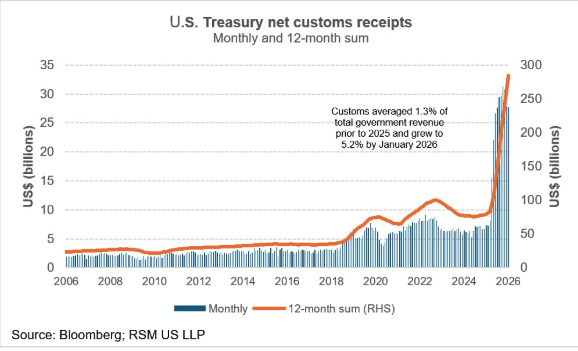
By late 2025, well over $130B in duties had already been collected and multiple estimates put the total exposure closer to $175B+ once the full window is counted.
Why refunds won’t be simple
Even if you paid tariffs that are now legally invalid, the path to getting money back is shaping up to be slow and adversarial:
- Refunds aren’t automatic, although some lawmakers are pushing for this.
- Eligibility will be argued.
- Documentation will matter.
- The government may resist broad repayment.
The Bottom Line for Overseas Manufacturing
Don’t confuse a legal win with supply chain certainty.
Tariffs remain a strategic tool in U.S. trade policy. The mechanisms may change. The targets may change. The court fights may continue. And the cost pressure will still land on businesses trying to plan production, pricing, and inventory months in advance.
The companies that navigate this best aren’t the ones who “guess right.” They’re the ones with a quoting and sourcing process that can absorb change without derailing timelines, margins, or customer trust.
That’s exactly what ITI was built for.
If you’re staring at a sourcing decision and wondering, “What happens to my cost if tariffs shift to a new rule?” let’s run the scenarios with you and build a plan that keeps your supply chain moving.